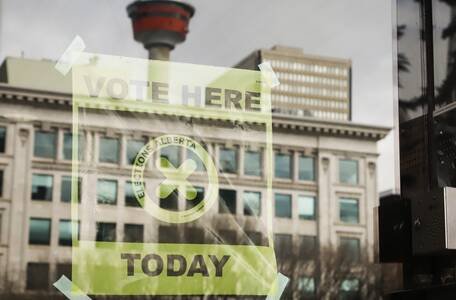
The morning after Alberta's referendum, the political argument moved from counting to consequences. With more than 1.5 million votes counted, unofficial results from Elections Alberta showed about 76 per cent of voters chose to remain in Canada and close to 24 per cent backed beginning a process toward separation, CBC News reported. CBC called the result late Monday after about a third of ballots were counted, once delays at roughly 100 of the province's 1,400 polling stations — which pushed results back more than two hours — had cleared.
Prime Minister Mark Carney, who grew up in Edmonton and campaigned for unity, welcomed the verdict. 'Albertans made a clear choice. They chose unity, to build together, and to take care of each other. Above all, Albertans chose Canada,' he said. Premier Danielle Smith, who called the vote and voted herself for remaining, said she was very pleased early results showed widespread support for staying, and has said the secession question should be considered closed — asked whether she would commit to not holding another referendum on separation after a remain vote, she answered: 'Not as long as I'm premier.'
Conservative leader Pierre Poilievre, whose parliamentary seat is in Alberta, told supporters Albertans were not 'quitters,' calling Canada 'a people, a flag, a land, a history and a promise.' At the federalist election-night party in Edmonton, Thomas Lukaszuk of Forever Canadian said the result showed Alberta would not be the 'weak link' in Confederation, while urging dialogue with the roughly one in four voters who backed the separation path. Separatist leaders, for their part, said the movement would not disappear and vowed to pursue another vote.
The referendum's other nine questions — five on immigration and four proposing constitutional changes — will take days to count, and they will shape Alberta's negotiations with Ottawa even with the central question settled. Turnout was heavy: more than 1.35 million Albertans, about 43 per cent of eligible voters, cast advance or special ballots before Monday, and First Nations turnout was reported strong, including at a Siksika Nation-area station that ran out of ballots and stayed open past 10 p.m. MT so everyone in line could vote.