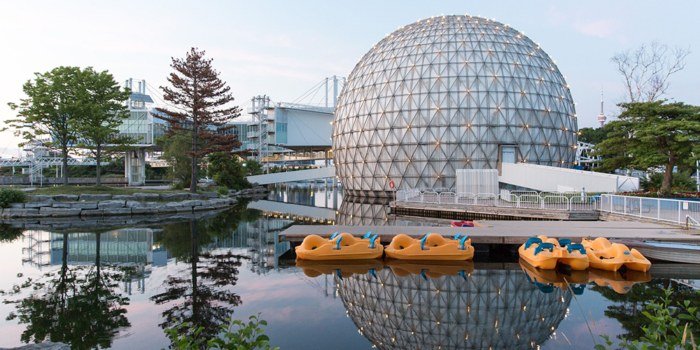
Toronto's longest-running waterfront fight reached the country's highest court this week. The Supreme Court of Canada heard the Ontario Place Protectors appeal on Thursday, October 15, challenging the Rebuilding Ontario Place Act, the provincial law that cleared the way for a private spa and waterpark on the West Island under a 95-year lease.
The appeal asks two questions with reach far beyond one Toronto park: can a government pass a law that shields its own decisions from existing environmental and heritage laws and from court review, and is Ontario Place a protected 'public trust' — land the government holds on everyone's behalf?
The interveners underline the stakes. A coalition of Ontario Place for All, the Toronto Field Naturalists, Democracy Watch and the National Trust for Canada was approved to intervene, alongside the City of Toronto, Greenpeace Canada, Ecojustice, the Canadian and B.C. Civil Liberties Associations, the Canadian Constitution Foundation and several First Nations. Most attorneys general line up on the other side.
The lower courts upheld the legislation: an Ontario judge dismissed the original application and the Court of Appeal did not overturn that. The Supreme Court granted leave in January 2026 without reasons, as is its custom — agreeing to hear a case is not agreeing with it. There is no injunction pausing work at the site, and more than 850 trees were removed from the West Island in 2024.
A judgment is not expected on hearing day; the court typically reserves its decision. Whatever it rules will set the template for how far governments across Canada can go in fast-tracking projects past their own laws.