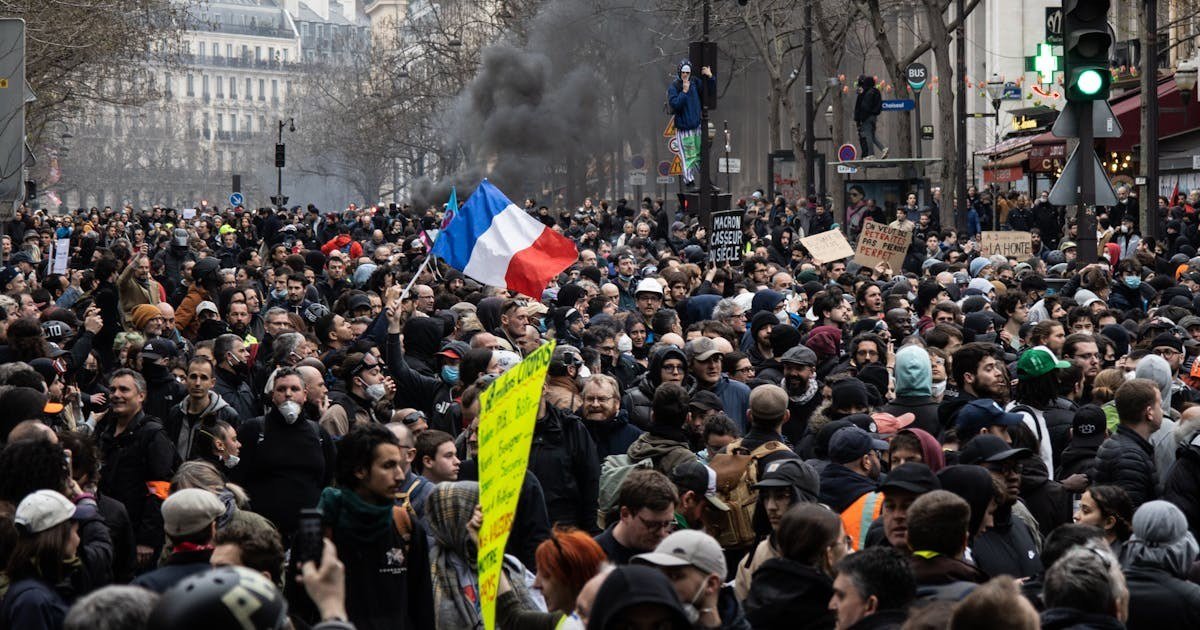
France's government is under the kind of pressure that reshapes presidencies. After a weekend of rioting and looting that followed protests by more than half a million people over the cost of living and struggling public services, President Emmanuel Macron has acknowledged failures in anticipation and intelligence — and refused his interior minister's resignation.
Interior Minister Laurent Nunez had offered to go after conceding that French police lost control during the disorder, in which buildings were burned and shops looted. Macron declined the offer, keeping Nunez in post as the government prepares its response.
The president has vowed an 'uncompromising' response and said protesters who attacked government buildings need to pay for their crimes, while also calling for calm and order as some looting continued in Paris. Thousands were arrested across the weekend of unrest.
The BBC's Katya Adler writes that political tension now grips France, with the violence marring what began as mass protest against squeezed living standards and strained public services — grievances that reach well beyond the rioters themselves.
The timing sharpens the stakes: a critical budget vote lies ahead in Macron's final months, and how a weakened presidency handles security, spending and public anger at once will define what remains of its authority.